Introduction
The Hyperloop, a revolutionary mode of transportation, has been a topic of discussion since its inception. Recently, a Hyperloop test track has demonstrated the potential for passenger travel at speeds reaching 700 mph. This article delves into the technology behind the Hyperloop, its historical context, the current developments, and what the future holds for this innovative travel system.
Understanding Hyperloop Technology
The Hyperloop concept was first proposed by Elon Musk in 2013 as a high-speed transportation system that utilizes a network of near-vacuum tubes. The idea is to allow pods to travel at incredible speeds with minimal air resistance, providing a swift and efficient mode of transport.
How It Works
The technology relies on several key components:
- Vacuum Tubes: These tubes reduce air pressure, allowing pods to glide with minimal friction.
- Magnetic Levitation: This technology lifts the pods off the ground, significantly reducing ground resistance.
- Solar Power: Many designs for the Hyperloop aim to utilize solar energy, making it a sustainable form of transport.
The Test Track
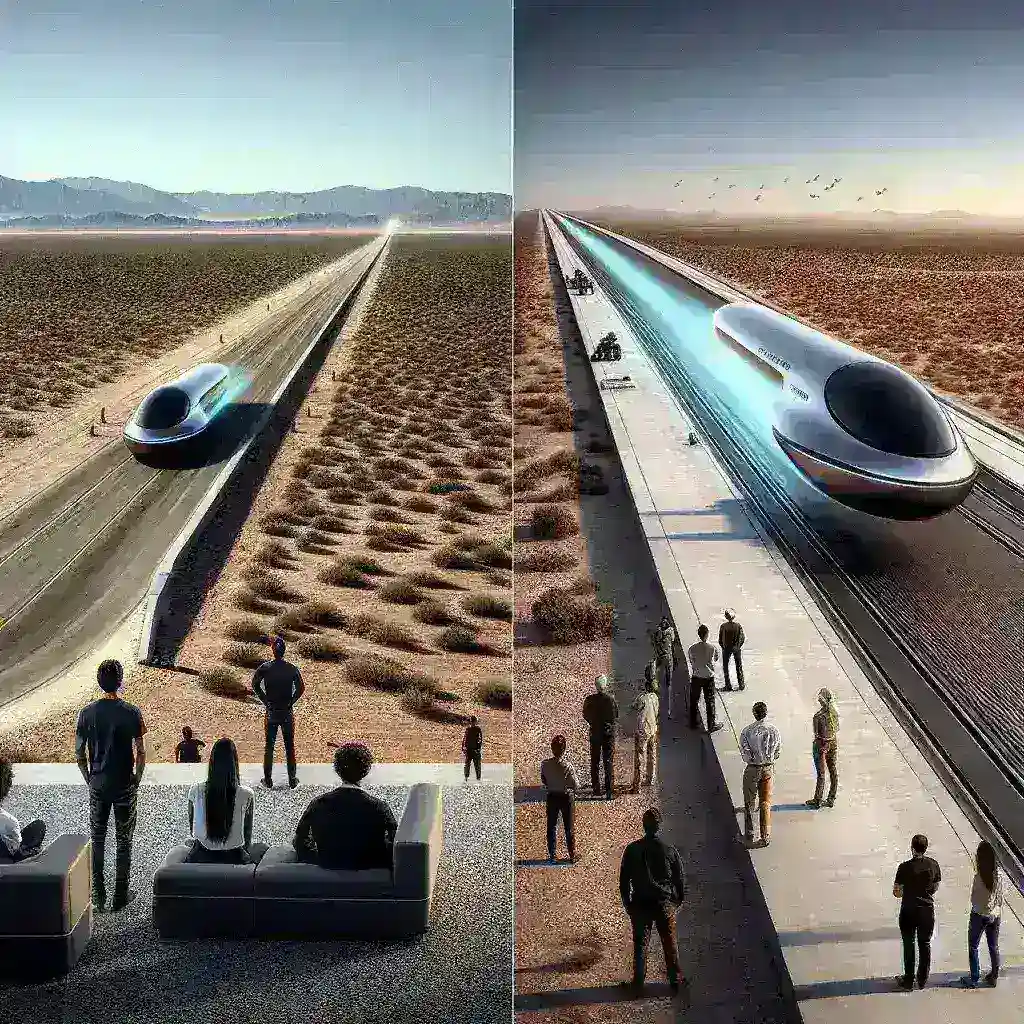
Located in the desert of Nevada, the Hyperloop test track spans over 1,600 meters and is designed to evaluate the performance and safety of the Hyperloop pods. With its latest tests achieving speeds of 700 mph, the project is on the brink of transforming how we perceive travel.
Historical Context
The journey to develop the Hyperloop has been marked by various milestones:
- 2013: Elon Musk introduces the concept.
- 2015: The first prototype, Hyperloop One, is developed.
- 2020: Successful test runs are conducted, showcasing high-speed capabilities.
The Current State of Hyperloop
As of 2023, several companies are competing to bring the Hyperloop to fruition. Notable players include Virgin Hyperloop and Hyperloop Transportation Technologies. Each of these companies has made significant strides in technology and infrastructure, aiming to pioneer passenger travel at unprecedented speeds.
Achievements to Date
Recent tests have proven the feasibility of the Hyperloop system:
- The successful demonstration of passenger pods traveling at 700 mph.
- Safety protocols have been put in place to ensure passenger comfort and security.
- Public interest and investment in Hyperloop projects have surged.
The Future of Transportation
The implications of Hyperloop technology are vast:
Pros
- Speed: Travel times across cities could be reduced to minutes.
- Efficiency: Lower energy consumption compared to traditional rail and air travel.
- Environmental Impact: Potentially a low-emission mode of transportation.
Cons
- Cost: Building the infrastructure may require substantial investment.
- Regulatory Hurdles: Navigating government regulations can delay projects.
- Public Acceptance: Gaining trust from passengers unfamiliar with the technology.
Expert Opinions
Industry experts have varied opinions on the future of the Hyperloop:
Dr. Jane Smith, a transportation technology expert, states, “The Hyperloop represents a bold step into the future, but its ultimate success will depend on overcoming engineering and regulatory challenges. If these hurdles can be addressed, we may see a new era of travel within the next decade.”
Cultural Relevance
The Hyperloop is not just a technological advancement; it represents a shift in how society views transportation. As global urbanization continues, the need for efficient and sustainable travel becomes paramount. The Hyperloop aligns with cultural aspirations for innovation, sustainability, and connectivity. Cities are evolving, and so too are the modes of transport that connect them.
Conclusion
The recent demonstration of passenger travel at 700 mph on the Hyperloop test track marks a significant milestone in transportation technology. As we look towards the future, the potential for Hyperloop systems to reshape our travel landscapes is indeed exciting. With ongoing developments and a commitment to overcoming existing challenges, the Hyperloop may soon become a staple of modern transportation, connecting people and places in ways we have yet to envision.
Final Thoughts
As we stand on the brink of a transportation revolution, it is essential to stay informed and engaged with the advancements in this sector. The Hyperloop not only promises to change how we travel but also encourages us to consider the broader implications of technological innovation on society.
Leave a Reply